Tomato soup
In the summer light of 1970s Aotearoa, time felt slower, softer, endless. The days smelled of cut grass, petrol, and sun-warmed tomatoes. The world was smaller, but it seemed full.
Every summer, Mum and her friend Lis would head “up the line” to Otaki, an hour north of Wellington. They’d pile into the old Valiant, windows down, cigarettes lit, music on the radio. State Highway 1 rolled out ahead of them, lined with farms and fruit stalls, their painted signs fading in the sun.
Lis went for berries for her jam. Mum hunted tomatoes for her soup. She always said the best ones were the soft ones, just tipping over into too ripe, when the sweetness had started to deepen and the skin gave way with barely a touch. Those trips weren’t really about food at all. They were about freedom.
When they came home, the car reeked of tomatoes. Beans tangled with garlic stalks, raspberries leaking through paper bags, tomatoes, still warm from the sun. Lis and Mum would arrive, calling through the strip blinds for me to help.
Those afternoons felt huge, something rare was happening. The smell hit first when Mum carried the boxes inside. Warm tomatoes, damp soil, green beans, and that soft sweetness of fruit in paper. Lis would hand me a fistful of raspberries as a treasure of taste. I’d eat them, fast, juice running down my hands, the taste bright and sharp. It heralded jam season, and Mum’s soup would soon follow.
The harder tomatoes would sit in bowls for days, softening in the sun. Mum was patient but fussy. She’d test them each morning, pressing her thumb into their skin, deciding which were ready.
When it was time, she’d start. The stockpot came down first from the wash-house shelf, huge and silver, coated in dust and cobwebs. That shelf was a jungle of old jars, vinegars, sherry, and spiders, and I’d stand barefoot on the cool lino watching Mum. Mum would grunt, drag the pot outside, hose it down, then clatter it onto the stove.
Radio Windy played in the background. The weather report always said the same thing: “Fine and sunny, light southerly.” Then came the music. Creedence Clearwater Revival, The Eagles, Fleetwood Mac sounds of that era that remind me now of how to feel.
The back door stayed open. The sound of cicadas and birds filled the kitchen. Mum lit a cigarette, poured a sherry, its sweet smell hitting my nostrils, and pointed at the spice rack. “Grab me the oh-reg-eno, love.” I’d hand it to her, the little jar sticky with grease and age. She always called oregano her secret ingredient, though everyone probably knew that taste.
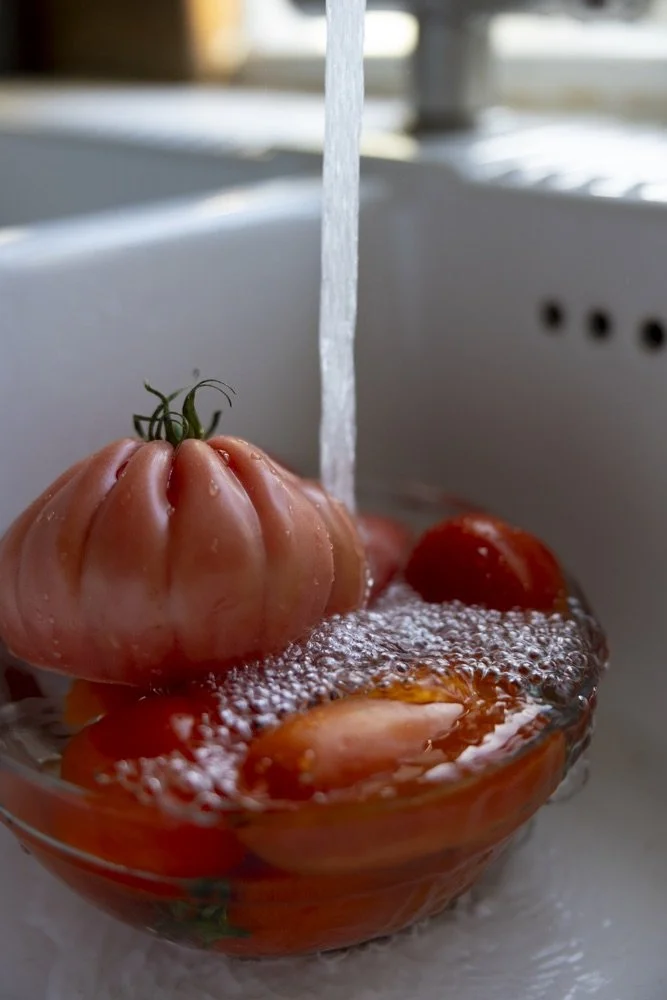
She poured the softened tomatoes into the sink, running cold water over them. Then she lifted me up and sat me on the bench. She handed me one, I bit. The skin broke under my teeth, sweet and metallic, juice running down my chin. She took it from my hand, took a bite, rolled her eyes, and muttered “yum.” It was the highest praise she could give anything.
One by one, she methodically washed the tomatoes, rubbing off the dirt, snapping away the stalks, cutting out the hard, woody core. Cigarette smoke curled through the kitchen. The air smelled like sunshine and fresh-cut grass. Duffy, the cat, sat under her chair, pretending not to listen, twitching his tail whenever I got too close. He hated me, mostly because I existed. I’d sit on the floor building a speeder bike out of Lego that never looked quite right. The radio hummed. The onions hissed in the pan. Slowly, the soup began to smell like itself. My stomach grumbled.

By late afternoon, the light through the window turned gold. The tomatoes were chopped and added, the pot bubbling slowly. Around the edges, the tomatoes caught and caramelized. “That’s the good bit,” she’d say, scraping it back into the soup with a flat wooden spoon. Mum’s voice carried through the steam. “A pinch of sugar,” she said. “Always. Tomatoes are fruit. You’ve got to remind them, son.” She said her dad used to give the kids halves of tomatoes sprinkled with sugar straight from the garden. “Said it brought out the sunshine.”
Then came the vegetable mincer. It lived up high, rusty and stained with last year’s seeds. She’d clamp it to the side of the stockpot, scoop in the lava-hot tomatoes, and start to crank. The sound filled the room. Metal on metal. What came out was smooth and beautiful. Mum would pour a Bacardi and Coke, light another cigarette, and grin. She knew.
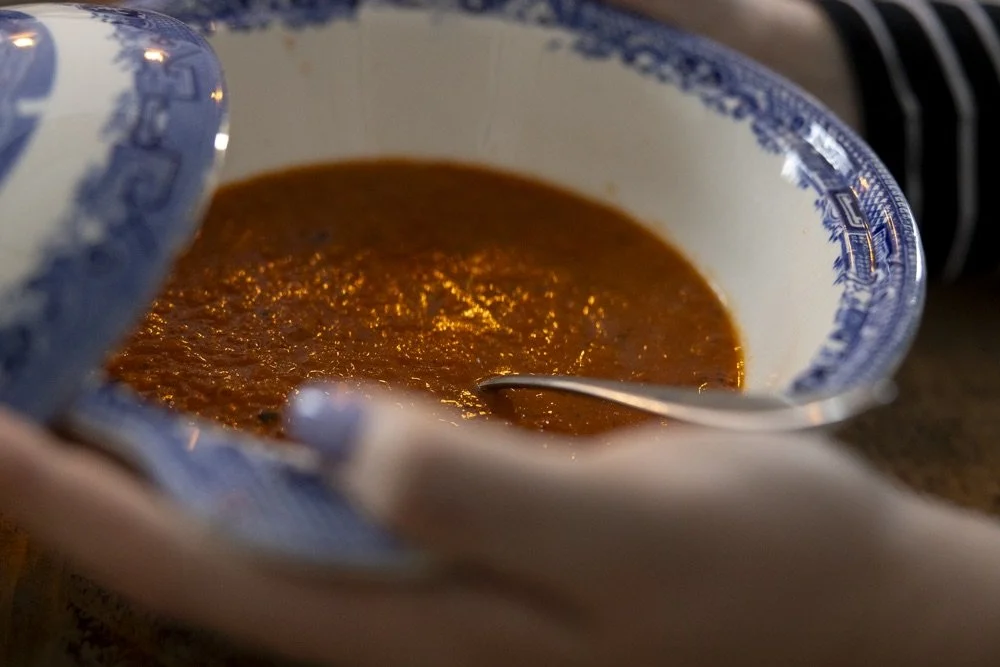
The soup went into old Tip Top Neapolitan ice cream tubs that she saved. We’d fill each one to the top, wipe the rims clean, and line them up in the freezer. Some for friends. Some for dinner. Some for love.
Mum passed away in December 2021. I found myself (now 50 years old) standing in her kitchen, her happy place, her sanctuary, packing away her life. As I cleared the freezer, I saw it… staring at me, one of those tubs buried deep. The label had faded. Covered in ice. It had been there for decades. Must have been at least 30 years. I held it for a long time, closed my eyes, and cried. I wanted to taste it again. To taste that time again.
I threw it away.
There was regret, yes, but I soon realized, it was never about that soup. It was the smell of oregano, its oil being released by a bubbling stockpot full of tomatoes. Her cigarette burning in the ashtray. The sweet-smelling sherry glass, half full, the hum of the radio, long, golden light pouring through the back door on a late Saturday afternoon, and a mother teaching her son how to make tomato soup.
